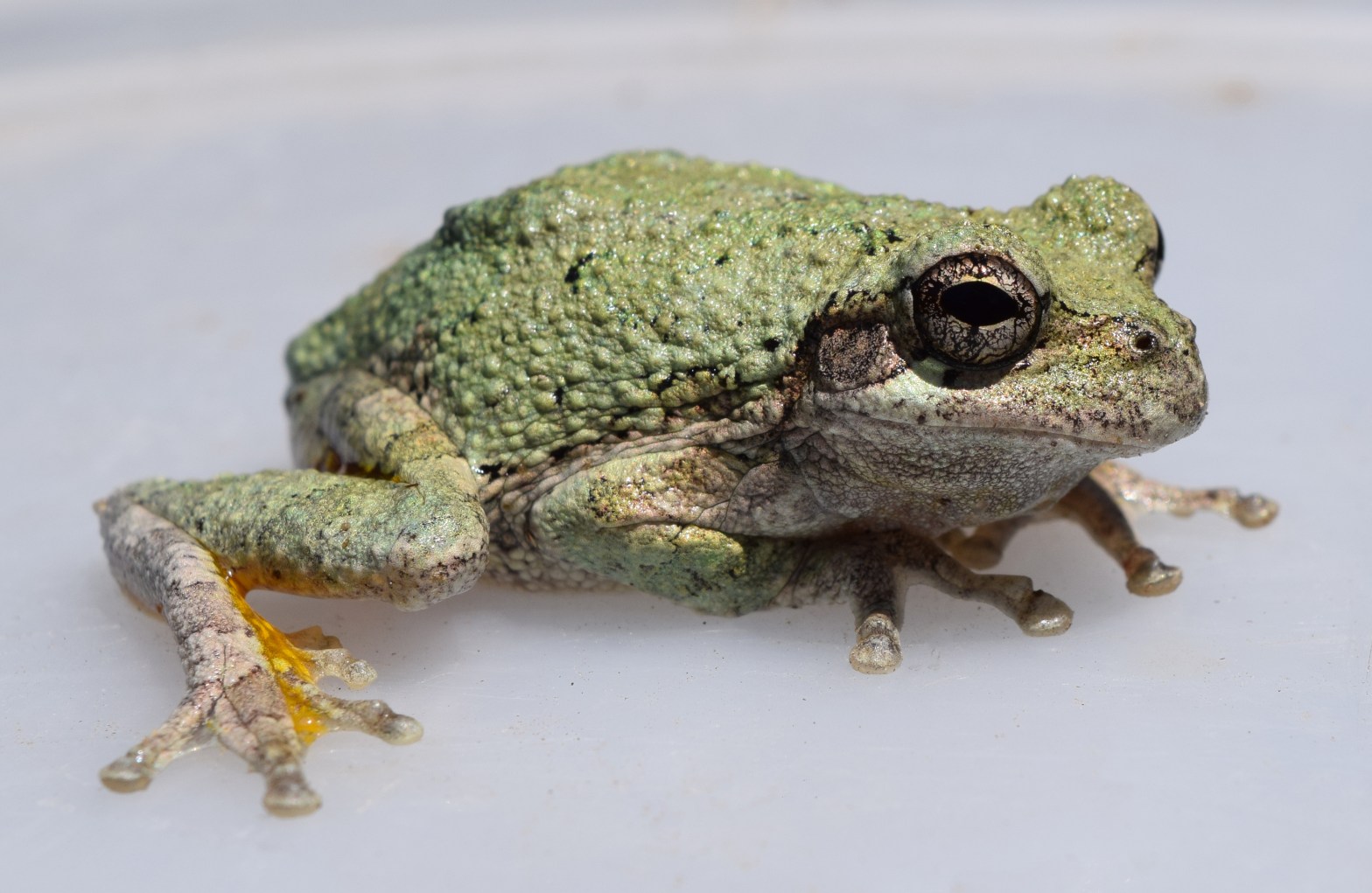
a powerful presence in the garden
A single frog can eat over 100 insects in one night.
Attracting and keeping frogs and toads in your garden will help moderate pest populations without the need for chemical or natural pesticides.
While tending my garden one August morning I stumbled across a guardian. The night prior was a muggy night, but a cold front moved through and dried up the air quite nicely. The following morning I headed out to our family garden to gather some cucumbers for breakfast, the boys love crunching on cucumbers morning, noon and night. As I walked out the door with my coffee in hand, I planned out my path across the landmines of chicken poop scattered across the yard, trying to not spill my coffee or land on a giant chicken turd in my nice new flip flops.
I did it! I made it to the garden without stepping on any turds… I began to dig through the leaves in search of that perfect “cuke”. As I dug and dug I got itchier and itchier (if you ever stuck your arm vigorously into a tangly mess of cucumbers vines you know what I am talking about) anyway… As I pushed a leaf aside I notice a bright green blob move and sure enough I spotted a gray treefrog. I know, I know I said gray treefrog but let me explain. The gray treefrog or Dryophytes versicolor is a native arboreal frog commonly found in Massachuchusetts.
Frogs have moist smooth skin and spend most of their lives in or near water. … Both frogs and toads are beneficial to the garden because they feed on many pests such as, bugs, beetles, caterpillars, cutworms, grasshoppers, grubs, slugs, and a variety of other pests. A single frog can eat over 100 insects in one night.
– Wikipedia
“As the scientific name implies, gray treefrogs are variable in color owing to their ability to camouflage themselves from gray to green, depending on the substrate where they are sitting. The degree of mottling varies.[3] They can change from nearly black to nearly white. They change color at a slower rate than a chameleon. One aspect that is unique to this frog appearance is that its legs feature a dark bandish pattern which then contrast sharply with the bright yellow or orange under the sides of its legs.” (Wikipedia)
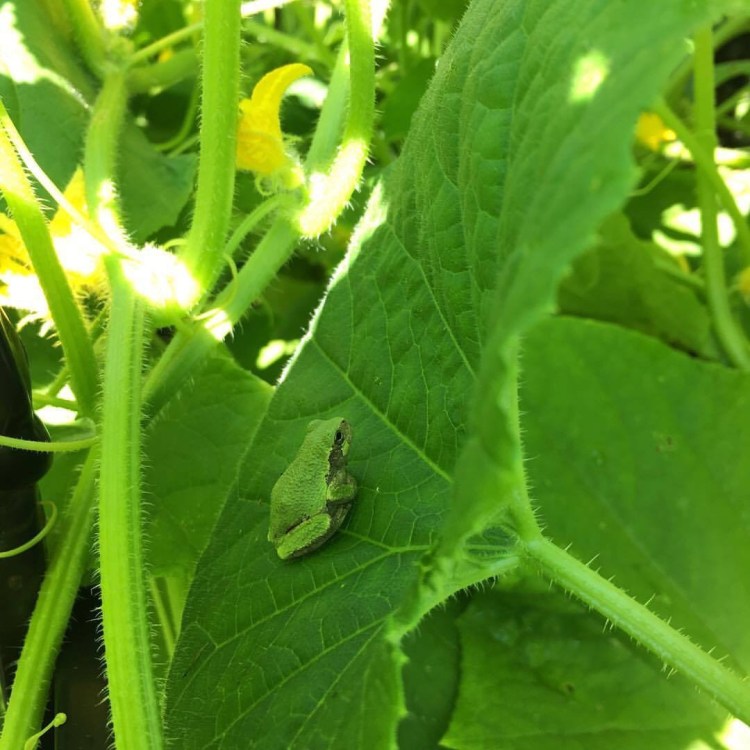
Ok, back to my exhilarating story…This strictly nocturnal creature was sitting under the shadow of the cucumber leaves waiting for its next meal. When tending my garden I often find a wide variety of insects, some beneficial and others not so much. When I came across this “guardian of the cucumber” I was excited to take a pic, lucky for me I had my camera 200 feet on the other side of the chicken poop landmine field. I carefully lowered the leaf back down so I didn’t disturb the frog and carelessly ran to grab my camera. With my flip flops caked in chicken fertilizer, I opened up the garden gate and crept in for the photo. I peek under a couple leaves and there it was, same spot just sitting. I fired off a couple pictures, checked my settings and took a couple more.
If you head out to your garden this summer, take a peek under those leaves, you will be amazed at what you can find in your own backyard and leave the pesticide work to the wildlife.

